
Make Weekly Meal Planning Simple
Two things consistently challenge me in the kitchen (okay, I’m sure there are more, but these top the list): wasting food and figuring out what to make for dinner.
Deciding what to cook and what to serve isn’t always easy. There are so many choices, and naturally, I want them all. Then there’s the frustration of reaching the end of the week only to discover forgotten vegetables in the crisper, leftovers no one ate, or groceries I had every intention of using. Throwing away perfectly good food is like fingernails on a chalkboard to me.
Some years ago, I started using a weekly meal planner to avoid that dreaded question: “What do you want for dinner tonight?”
It made a bigger difference than I expected. Dinner became easier to manage, I spent less money on unnecessary groceries, and a lot less food ended up in the garbage.
Weekly meal planning doesn’t have to be complicated or rigid. It just takes a little time each week and a willingness to think ahead. And once you get into the habit, the payoff is well worth the effort. Here are four simple steps to get started.
Inventory. Plan. Shop. Cook.

Inventory
Avoid food waste by using what you already have on hand.

Plan
Choose meals to fit your schedule while offering balance and variety.

Shop
Save time and money with an organized list based on a meal plan.

Cook
Enjoy making meals with recipes you know your family will actually eat.
Start With What You Already Have
Before deciding what to make for the week, take a quick inventory of your pantry, refrigerator, and freezer.
If you have six cans of beans hiding in the pantry, maybe it’s a good week for baked beans, chili, or a bean salad. Have fresh vegetables lingering in the refrigerator? Plan a meal that uses them before they become another unfortunate discovery in the back of the crisper drawer.
And don’t forget the freezer. Frozen food may last a long time, but it doesn’t last forever. Regularly working those ingredients into your weekly meals keeps the freezer from becoming a permanent storage facility for food you’ve forgotten you own.
The idea is simple: shop your kitchen before you shop the grocery store.
Plan Meals Around Your Week
Once you know what you already have, create a weekly meal planning menu that works with both your inventory and your schedule.
If you know you’ll be working late on Tuesday, that probably isn’t the best night to plan an elaborate dinner that takes two hours to prepare. Instead, make a larger meal on Monday and plan to turn the leftovers into an easy dinner on Tuesday.
Busy night? Plan something quick. More time on Sunday? Make something that takes a little longer and perhaps gives you leftovers for another meal.
Your meal plan should make your life easier—not give you another schedule you have to follow perfectly.
Make Your Grocery List
Once your meals are planned, make a grocery list based on what you actually need to prepare them. This is one of the easiest ways to save time, control grocery spending, and avoid buying food you already have.
Before adding an ingredient to the list, check the pantry and refrigerator one more time.
I learned this lesson the hot-sauce way.
At one point, I discovered three large bottles of hot sauce in my pantry plus another half-bottle in the refrigerator. Apparently, I had repeatedly forgotten to check before heading to the store.
Good thing I put that S#!T on everything, because I had a lot of it to use up!
Put Your Weekly Meal Planning to Work
When it’s finally time to cook, much of the work is already done. You know what you’re making, you have the ingredients you need, and you don’t have to stand in front of the refrigerator at 5:30 wondering what on earth you’re going to feed everyone.
I also find that meal planning makes it easier to add variety to our meals. When you’re deciding at the last minute, it’s tempting to fall back on the same familiar dishes. Planning ahead gives you an opportunity to try a new recipe, use an ingredient differently, or finally make something you’ve had bookmarked forever.
Keep Meal Planning Flexible
Meal planning is definitely a process, but it doesn’t mean you have to cook seven elaborate dinners every week.
Some nights might be leftovers. Others might be sandwiches, takeout, or something pulled from the freezer. And there is absolutely nothing wrong with putting cereal on Thursday night’s menu.
The goal isn’t perfection. It’s having enough of a plan to make everyday cooking a little easier, reduce food waste, and eliminate some of those last-minute “What are we having for dinner?” moments.
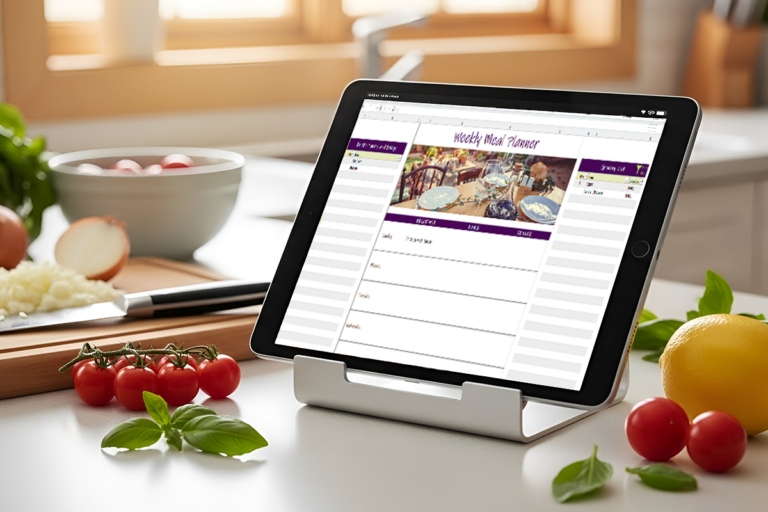
I use a spreadsheet to organize my weekly meals (yes, I’m a bit of a closet geek!), and you’re welcome to use it, too.
Download my Weekly Meal Planning spreadsheet and start planning your next week of meals.
Here’s to less food waste, fewer last-minute grocery runs, and a lot less wondering what’s for dinner.
Enjoy!

My Amazon Storefront
Explore my handpicked selection of the tools, gadgets, and decor that I use and love in my own kitchen. From cookware to must-haves, these are the products that make cooking more fun, functional, and beautiful.